
Real Time Port Authority

Back in 2023, I was tracking a shipment stuck outside the Port of Los Angeles. The freight forwarder said “minor congestion.” The client said “why is my inventory not here?” And I was refreshing three different dashboards at midnight.
That was my wake-up call.
Real time port authority systems are no longer a nice add-on. They are becoming the backbone of global supply chain visibility. As someone who has worked with logistics teams across India and the US for over a decade, I have seen the shift firsthand. What used to be static port bulletins are now live, API-driven intelligence layers.
And if you move cargo, manage imports, run a warehouse, or even trade commodities, this matters right now.
What Is Real Time Port Authority?
Real time port authority refers to digital systems used by port authorities to provide live operational data about vessel movements, berth availability, cargo handling, congestion levels, and security alerts. It works by integrating AIS vessel tracking, terminal operating systems, customs databases, and IoT sensors into centralized dashboards that update continuously.
According to the World Bank trade facilitation research, ports that implement digital trade facilation measures can reduce cargo clearance times by up to 30 percent. Meanwhile, the UNCTAD maritime trade statistics reports that over 80 percent of global trade by volume moves through maritime transport as of 2024.
When port data becomes real time, supply chains become predictable.
That is the promise.
Why Real Time Port Authority Matters More in 2025
Here is the short answer: volatility.
Global shipping disruptions since 2020 have exposed how fragile port operations can be. The International Maritime Organization notes that congestion spikes during crisis periods have increased average vessel waiting times by double digits in major hubs. In 2024, the Port of Los Angeles processed over 8.6 million TEUs, making it one of the busiest in the Western Hemisphere. Even small delays ripple through thousands of supply chains.
But here is where it gets interesting.
Five years ago, most port authority websites offered static PDF notices. Today, leading ports like the Port of Singapore provide live vessel traffic data, berth scheduling tools, and automated alerts for shipping lines.
That shift changes decision-making at every level:
Freight forwarders can reroute shipments before vessels queue offshore.
Importers can plan warehouse staffing based on real arrival times.
Traders can adjust pricing when discharge delays impact commodity supply.
In my experience, companies that rely only on manual updates are always reacting. Teams using real time port authority dashboards are forecasting.
And forecasting wins.
How Real Time Port Authority Systems Actually Work
At a technical level, real time port authority platforms combine multiple data layers into a single operational view. Think of it as air traffic control for ships.
The 4 Core Components
1. AIS Vessel Tracking
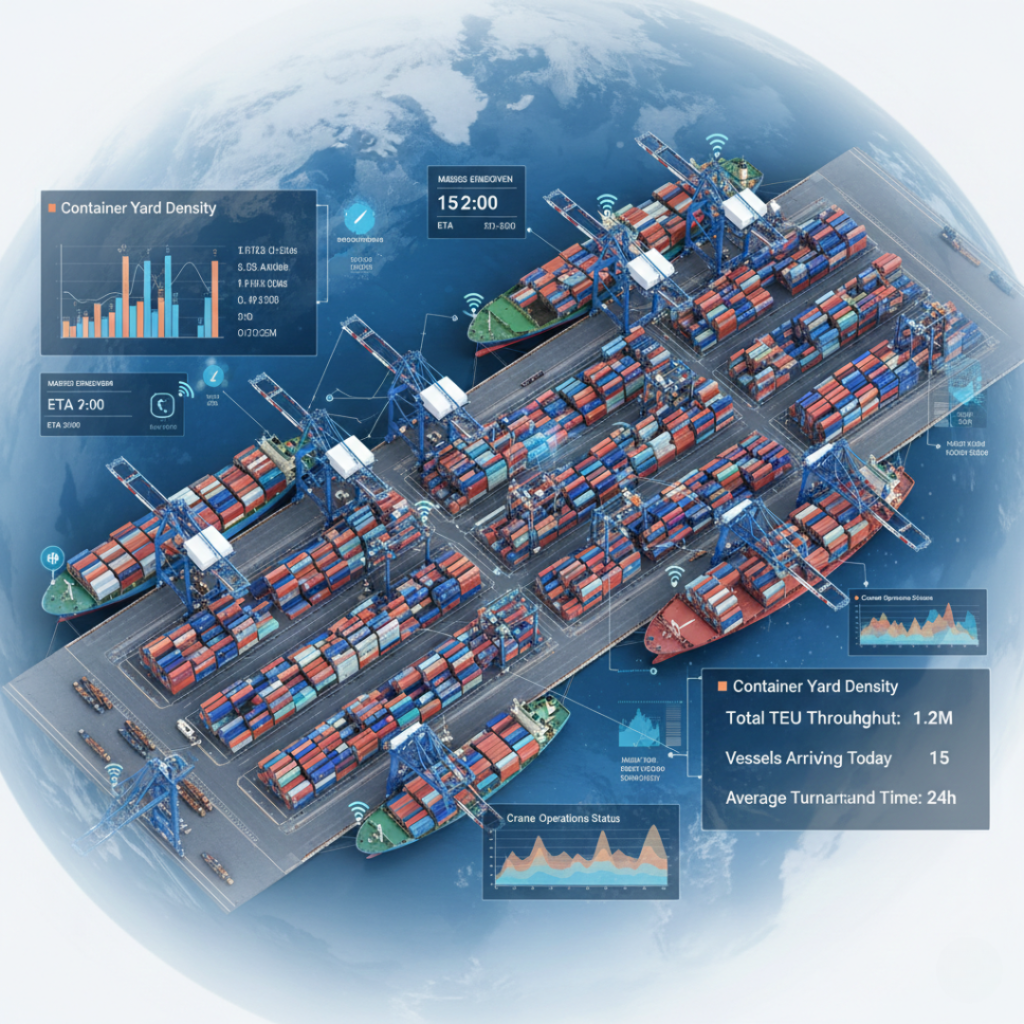
Automatic Identification System signals transmit vessel location, speed, and heading. According to the National Oceanic and Atmospheric Administration, AIS improves maritime domain awareness and collision avoidance. Ports ingest this data to estimate arrival times dynamically.
The International Maritime Organization AIS overview also details how mandatory AIS carriage requirements enhance global vessel transparency.
2. Terminal Operating Systems
These manage container yard movements, crane operations, and berth allocation. When integrated in real time, they show how quickly containers are being discharged.
3. Customs and Trade Data Integration
Electronic data interchange with customs authorities speeds up cargo clearance. Research from the Organisation for Economic Co-operation and Development shows that digitized customs procedures significantly reduce trade costs.
4. IoT Sensors and Infrastructure Monitoring
Smart gates, RFID readers, and yard sensors provide live status updates on truck turn times and container availability.
When these systems are connected through APIs and cloud platforms, port authorities move from reporting yesterday’s data to predicting tomorrow’s congestion. Increasingly, these insights are delivered through real-time analytics platforms that transform raw vessel tracking and cargo data into actionable intelligence for shipping lines, terminal operators, and importers.
That predictive layer is where competitive advantage lives.
Real Time Port Authority vs Traditional Port Management
Let us compare.
| Feature | Traditional Port Model | Real Time Port Authority Model |
|---|---|---|
| Vessel Updates | Manual, periodic | Live AIS updates |
| Berth Allocation | Static scheduling | Dynamic reallocation |
| Cargo Visibility | Limited | End-to-end digital tracking |
| Data Sharing | Siloed | API-based integration |
| Decision Speed | Reactive | Predictive |
The difference is not cosmetic. It is structural.
A traditional model tells you what happened. A real time port authority system tells you what is happening and what is about to happen.
But here is the contrarian take: more data does not automatically mean better decisions.
I have seen teams overwhelmed by dashboards. If you do not align port intelligence with clear KPIs like demurrage cost reduction or container dwell time, you just create digital noise.
Technology is only as good as the decisions it informs.
Who Benefits Most From Real Time Port Authority?
The value depends on your role in the maritime ecosystem.
For Shipping Lines
Live berth updates reduce idle vessel time. According to maritime analytics firms in 2024, reducing anchorage waiting by even 12 hours can save tens of thousands of dollars in fuel and charter costs per voyage.
For Importers and Exporters
If you import electronics into Chennai or textiles into New York, knowing exact discharge timing helps plan trucking and warehouse labor. In Chennai’s growing logistics corridor, companies using live port feeds have reported smoother gate operations and shorter truck queues.
For Governments
Digital port transparency improves compliance and reduces corruption risks. The World Customs Organization promotes real time data exchange as part of modern customs reform.
When It May Not Be Essential
If you are a small business shipping one container per quarter, a freight forwarder’s updates may be enough. Not every company needs enterprise-level port analytics.
There is no one-size-fits-all answer.
Expert Insight: The Digital Port Movement
Dr. Martin Stopford, maritime economist and former professor at Clarkson Research, has long argued that shipping cycles are driven by information asymmetry as much as vessel supply. While not speaking specifically about real time dashboards, his broader research highlights how better data reduces market inefficiencies.
Research from the Massachusetts Institute of Technology Center for Transportation and Logistics has shown that supply chain visibility platforms improve operational resilience when disruptions occur.
That aligns with what I have observed. During a 2024 weather disruption affecting Gulf Coast ports, companies using real time port authority feeds rerouted cargo within hours. Others waited days for manual updates.
Hours matter.
The Bottom Line on Real Time Port Authority
After years of watching containers sit offshore while inboxes fill with apologies, here is what I believe:
First, visibility beats guesswork.
Second, data without action is wasted potential.
Third, real time port authority tools are becoming standard infrastructure, not premium extras.
Whether you manage a global supply chain or a regional import business, understanding how ports operate in real time gives you leverage. And leverage in logistics means fewer surprises.
If you move goods across oceans, start by reviewing the digital capabilities of the ports you rely on. Check their official dashboards. Ask your logistics partner how they integrate live port data.
Because in 2025, waiting for yesterday’s update is already too late.
Frequently Asked Questions About Real Time Port Authority
In many cases, yes. Major ports publish vessel tracking and congestion metrics on official websites, though advanced analytics platforms may require subscriptions.
AIS-based tracking is generally accurate within minutes, but weather conditions and signal interference can cause minor delays.
Yes, especially through third-party logistics platforms that aggregate port data into user-friendly dashboards.
Indirectly, yes. Better timing reduces demurrage, detention, and storage fees.
No. Digital maturity varies widely. Leading hubs in Asia and Europe are more advanced than many developing ports.
AIS, IoT sensors, cloud computing, API integration, and terminal operating systems.