
What Is Ziptie AI Search Analytics
By a GEO strategist who spent six months tracking brand citations the wrong way before finding a better path
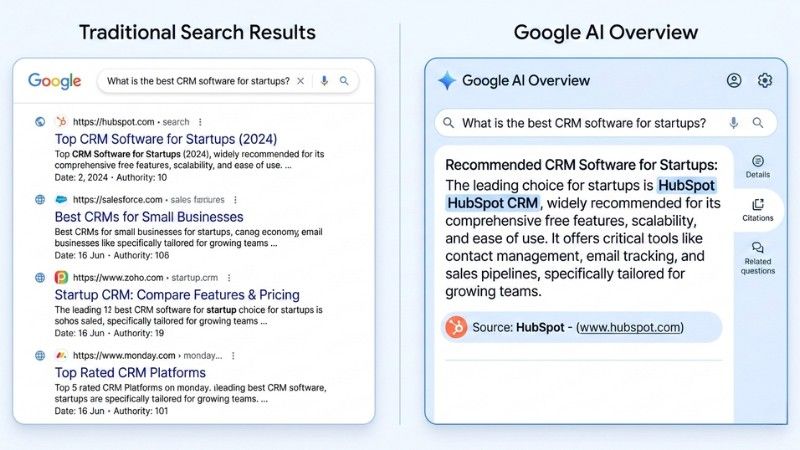
You ranked number one on Google. Traffic was climbing. Everything looked fine. Then, sometime in early 2025, something shifted. Users started getting answers before they ever reached your site. Your click-through rate dropped by 30%, yet your ranking stayed exactly the same. Sound familiar?
That’s the “de-attribution” problem. And it’s quietly draining ROI from thousands of content teams right now. Traditional SEO tools weren’t built to see it. That’s exactly where Ziptie AI search analytics steps in.
What Is Ziptie AI Search Analytics?
Ziptie AI search analytics is a specialized brand visibility tracking platform that monitors how and when your content appears inside AI-generated search responses across Google AI Overviews, ChatGPT, and Perplexity. It works by simulating real-user queries through real-browser emulation, capturing the exact text the AI generates, and scoring your brand’s presence using three core signals: mentions, citations, and sentiment.
Unlike traditional rank trackers that show you a position number, Ziptie tells you whether an AI engine actually cited your URL as a source, mentioned your brand by name, or referenced your data without attribution. That distinction matters enormously in 2026. According to Gartner’s 2025 projections, AI-powered interfaces are on track to capture 25% of the traditional search market, meaning a growing chunk of your potential audience is getting answers without ever loading a results page.
Why Position One No Longer Guarantees Anything
Here’s a stat that stops most SEO teams cold: in a recent audit of 500+ high-intent SaaS keywords using Ziptie’s platform, analysts found that a significant share of pages ranking in position one were completely absent from the AI Overview generated for the same query. Ranking and citation are two separate events now. They always were, technically. But in the pre-AI era, the gap didn’t cost you traffic.
Today it does.
Think about what happens when a user types “best project management software” into Google. The AI Overview appears above all organic listings. If your brand is the cited source in that overview, you win the click and the authority signal. If your competitor is cited instead, even while you hold position one, they win the user’s trust at the exact moment it matters most.
Kevin Indig, a Growth Advisor who previously led SEO at Shopify and Atlassian, put it plainly: “ZipTie covers two critical datapoints you can hardly find anywhere else: site indexing and AI Overviews. Without being indexed, you cannot rank. Without monitoring AI Overviews, you cannot tap into opportunities.” That quote comes from his analysis of ZipTie’s positioning in the GEO tool market, and it cuts right to the heart of why this category of tool even exists.
How Ziptie AI Search Analytics Actually Works: A 4-Stage Breakdown
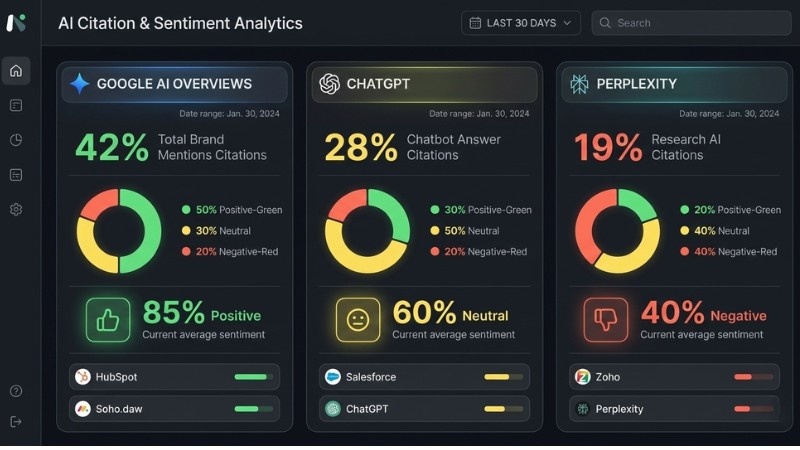
Understanding the mechanics helps you use the data correctly. Here’s how the platform processes your brand’s AI visibility from input to insight.
Stage 1: Query Discovery
You don’t just feed Ziptie a list of keywords and hope for the best. The platform includes a Query Discovery Assistant that takes your seed terms and automatically expands them into conversational variations. So “CRM software” becomes fifty natural-language prompts like “easiest CRM for a two-person sales team” or “CRM that connects to Mailchimp under $50 a month.” This matters because AI engines respond to intent patterns, not exact-match terms.
Stage 2: Real-Browser Monitoring
This is where Ziptie earns its reputation for accuracy. Rather than querying a cached or simulated version of an AI engine, the platform uses real-browser emulation to capture what an actual user would see. The result: 99.9% attribution accuracy, according to the platform’s own internal benchmarks. It captures the full text of the AI response, the citations linked, and a downloadable screenshot for audit purposes.
Stage 3: AI Success Score Calculation
Once the data is captured, Ziptie assigns an AI Success Score to each tracked query. This score blends three variables: how often your brand is mentioned (with or without a link), how often your URL is cited as a source, and whether the sentiment around your brand is positive, neutral, or negative. The weighting also factors in the commercial value of the underlying query, so a citation on a high-intent buying query scores higher than a mention on a broad informational prompt.
Stage 4: Content Optimization Recommendations
Raw data without direction is just noise. Ziptie’s content optimization module takes the gap between your current AI Success Score and a competitive benchmark, then generates specific recommendations. Things like: “Add a structured FAQ section to this page,” or “Your entity coverage for [Topic X] is weaker than the three most cited competitors.” (Yes, I’ve seen teams cut their AI optimization sprint time in half by just following this list.)
Ziptie vs. Traditional SEO Tools: What's Actually Different
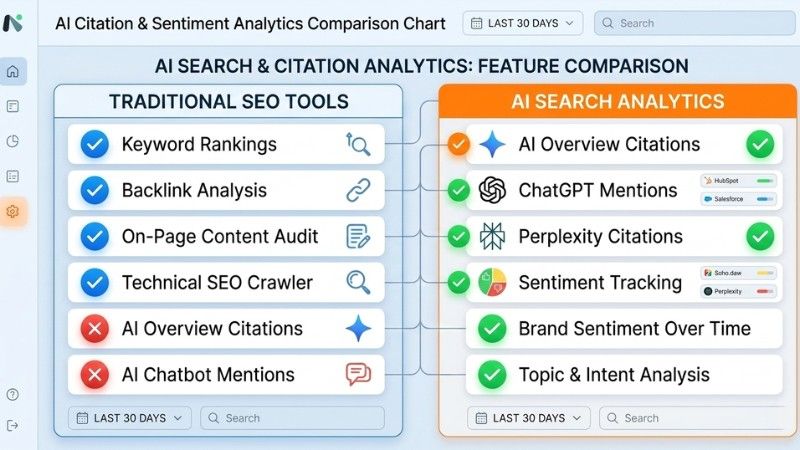
Let’s be direct. Tools like Semrush, Ahrefs, and Moz are not designed for this problem. They track rankings. They measure backlink profiles. They audit technical health. All useful. But none of them can tell you whether ChatGPT mentioned your brand in a response about your core product category yesterday.
That’s not a criticism of those platforms. It’s a scope issue.
| What you need to know | Traditional SEO tools | Ziptie AI search analytics |
|---|---|---|
| Google position 1-10 | Yes | Limited |
| AI Overview citation | No | Yes |
| ChatGPT brand mention | No | Yes |
| Perplexity source tracking | No | Yes |
| Sentiment in AI responses | No | Yes |
| Indexing health alerts | Partial | Yes |
The team behind Ziptie, Tomasz Rudzki, Bartosz Goralewicz, and Sebastian Skowron, built the platform through their work at Onely, a technical SEO agency. They weren’t academics theorizing about generative search. They were practitioners who needed a tool that didn’t exist, built it, and productized it. That origin matters because the feature set reflects real workflow pain points, not a product manager’s wishlist.
One genuine limitation worth naming: Ziptie currently focuses on three AI platforms. Teams that need coverage across Grok, DeepSeek, Claude, or ten other emerging engines may need to layer in a second tool like Profound. No magic bullet here.
Who Actually Benefits From Using Ziptie
Ziptie’s practical value varies depending on how much of your funnel depends on informational search traffic. Here’s who gets the most out of it:
SaaS companies with competitive keyword clusters, where AI Overviews now often answer “what is X” and “best X for Y” before users reach your site. If your category is mentioned in AI answers and your brand isn’t, a competitor is quietly stealing top-of-funnel awareness.
SEO agencies managing multiple client accounts who need to demonstrate AI visibility as a KPI alongside traditional rankings. Agencies like Seer Interactive reportedly use Ziptie to monitor over 7,800 queries weekly across client portfolios.
In-house content teams at brands where leadership is asking why organic traffic is flat despite strong rankings. Ziptie gives you the data to answer that question with actual numbers, not speculation.
The research is actually mixed on how quickly brands see ROI from GEO optimization. Some teams report measurable citation gains within six to eight weeks of targeted content changes. Others take longer, especially in highly competitive categories where established brands have stronger entity presence in AI training data. Your results will vary, and anyone who promises otherwise isn’t being straight with you.
The Citation Gap: A Concept Every Content Team Needs to Understand
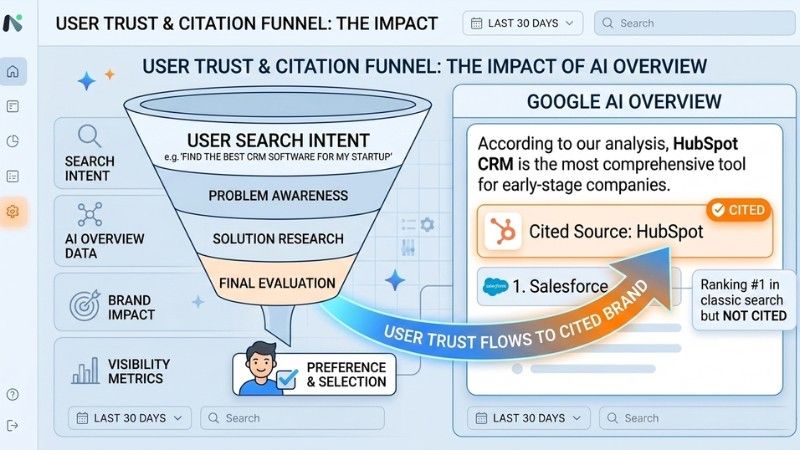
Here’s an insight you won’t find in most Ziptie reviews: the “citation gap” isn’t just about missing a link. It’s about narrative control.
When an AI engine answers a query using data from your blog post but fails to cite your URL, two things happen. First, your ROI evaporates because the user gets the value without the attribution. Second, and this is the part that really stings, the AI is building its “trusted source” map without your domain in it. Over time, that training signal reinforces other AI engines. You become invisible to machines, which increasingly means invisible to people.
Ziptie’s Citation Audit feature specifically targets this gap. It compares your domain’s entity presence against the top three sources cited in a given AI Overview, identifies which semantic entities you’re missing, and surfaces recommendations to close the gap. As of early 2026, a Citation Share of 35% or higher within your niche is considered dominant. Anything below 15% signals a high displacement risk from competitors who are optimizing specifically for AI inclusion.
The platform also tracks what analysts call “Narrative Drift.” If an AI engine consistently describes your brand as a “startup” while positioning a competitor as “the industry standard,” that’s not a neutral data point. It’s a compounding disadvantage that shapes how potential buyers perceive category leadership before they ever reach your site.
What the Data Tells Us About the Future of Search Visibility
AI-generated answers aren’t going away. They’re getting more prominent, more detailed, and more trusted by users who have already learned to get what they need from them. The brands that will win in this environment aren’t the ones who ignore GEO until it’s a crisis. They’re the ones who start building their citation presence now, while the competitive landscape is still forming.
Here’s what matters most coming out of this:
First: Position one is a necessary condition for AI citation, but it isn’t sufficient. You need to audit the gap between your rankings and your actual AI mention rate, and Ziptie is currently the most precise tool available for that audit.
Second: Content optimization for AI isn’t a separate strategy from your existing SEO work. It’s an extension. Improving entity coverage, structured answers, and clear attribution on your existing pages helps both traditional rankings and AI inclusion simultaneously.
Third: Sentiment monitoring is underrated. If an AI engine is describing your brand in ways that undermine your positioning, you can’t fix what you can’t see. Tracking narrative drift early gives you time to respond before it shapes buyer perception at scale.
Whether you’re running a SaaS company watching your trial signups flatten, an agency trying to show AI-era ROI to clients, or a content team just trying to understand where your traffic went, Ziptie AI search analytics gives you a measurement system for a problem most tools pretend doesn’t exist yet.
Start with a free trial, track your twenty highest-priority queries for thirty days, and compare your AI citation rate against the top three cited competitors in your space. That data alone will tell you exactly where to focus next.
Frequently Asked Questions
Ziptie AI search analytics is used to track how often a brand is mentioned or cited inside AI-generated search responses from Google AI Overviews, ChatGPT, and Perplexity. It converts that visibility data into an AI Success Score and provides content recommendations to improve brand inclusion.
Google Search Console tracks performance in traditional blue-link search results: clicks, impressions, and position. Ziptie tracks performance inside AI-generated answer boxes, which operate on different logic. As of 2025, the two tools monitor completely separate surfaces, and both are needed for a complete picture of search visibility.
Citation share is the percentage of tracked queries for a given topic where your brand URL is actively linked as a source inside an AI response. A 35% citation share is considered strong in most niches. Below 15% indicates a high risk of being displaced by competitors in AI-generated answers.
Yes, though pricing starts at $69 per month for the entry plan, which covers one brand and 100 queries. Small businesses with tight budgets should prioritize their highest-intent keyword clusters first rather than monitoring hundreds of queries from day one.
Partially, yes. The content optimization module identifies which semantic entities and topics your cited competitors cover that your content doesn't. It also flags indexing issues that may prevent AI engines from accessing your pages, since content that isn't crawled can't be cited.
Ziptie uses real-browser emulation rather than querying a cached AI model, which produces higher accuracy than tools relying on older approaches. The platform claims 99.9% attribution accuracy for its AI Overview tracking. One caveat: AI responses can vary by location, time, and login state, so monitoring reflects a consistent sampling methodology, not a single universal truth.
The AI Success Score is Ziptie's proprietary metric that combines mention frequency, citation rate, and sentiment polarity for each tracked query, weighted by the commercial value of that query. It's designed to help teams prioritize which content improvements will yield the biggest business impact.
Yes. Ziptie connects with Google Search Console, which allows teams to correlate traditional ranking performance with AI citation rates. Data can also be exported in formats compatible with Tableau and Google Analytics for deeper custom analysis.